
Payment Failures: Why European Carriers Face an Idle Fleet Crisis

 Author: Pickup2 Team
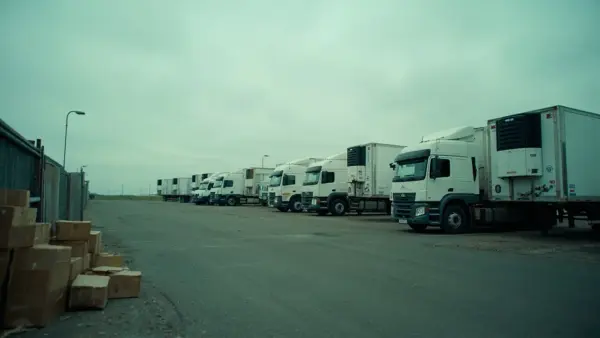
European road transport is grappling with a growing crisis: payment guarantee failures.
This critical financial challenge is forcing many hauliers to keep their fleets idle, even amidst robust demand for services. With high upfront operational costs for diesel, tolls, and wages, the fear of non-payment is severely impacting carriers' liquidity and highlighting an urgent need for robust payment security in increasingly complex cross-border operations.
The Growing Threat to Carrier Liquidity
The financial stability of European road carriers is under immense pressure. Hauliers face significant capital outlays to fuel their trucks, pay drivers, and cover road tolls before a single euro of revenue is collected. When payment guarantees fall through, or clients default, these upfront costs become debilitating, eroding profit margins and freezing available working capital.
This precarious situation leads to a vicious cycle: carriers, wary of further financial risk, are increasingly turning down potentially profitable routes. The reluctance to take on new business due to payment anxieties directly contributes to underutilized fleets and a fragmented market, despite the underlying demand for freight movement across Europe.
Mitigating Risk in Cross-Border Operations
To combat the threat of non-payment, many carriers are compelled to implement more stringent vetting processes for new partners. This often involves extensive due diligence, legal consultations, and a heavy reliance on established, trusted relationships. However, in a dynamic and expanding European market, limiting partnerships to a small circle can hinder growth and operational flexibility.
Digital platforms are emerging as a crucial tool in this mitigation strategy. Leveraging platforms that offer company verification (EU VAT/VIES checks, document review) can help carriers assess potential partners and build trust before committing to a load. Additionally, features like post-transaction company ratings and reviews provide valuable insights into a partner's reliability, fostering a more transparent and secure environment for all participants.
The Role of Digital Platforms
Freight exchanges play a vital role in addressing these financial anxieties by introducing greater transparency and structured communication. They facilitate the secure discovery of loads and capacity, allowing carriers to publish their available fleet capacity to fill empty runs and find return loads across Europe. Shippers and freight forwarders, in turn, can post loads with detailed requirements, including FTL/LTL, multi-stop routes, vehicle needs, and temperature control.
These platforms enable direct bidding and negotiation on loads and capacity, often with built-in real-time chat between companies. This direct communication ensures that payment terms and conditions can be clarified and agreed upon transparently, reducing ambiguity and fostering stronger, more reliable business relationships. The ability to find verified partners and establish clear terms digitally significantly enhances operational confidence.
Conclusion
The issue of payment guarantee failures presents a critical challenge to the liquidity and operational capacity of European road carriers. Addressing this requires a combination of vigilance and the adoption of robust digital tools. In a landscape increasingly challenged by financial uncertainty, platforms like Pickup2 offer vital tools for carriers to find verified partners, manage their fleet, and secure profitable work with greater confidence.