
Red Sea Crisis: 2026 Rerouting Strategies for EU-Asia Freight

 Author: Pickup2 Team
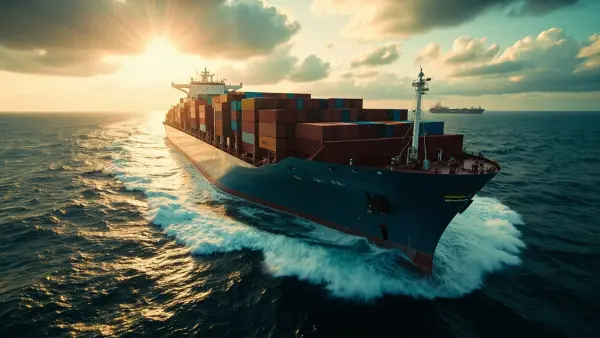
Red Sea disruptions have become the defining variable in EU-Asia container shipping, forcing a structural reset of routes, schedules, and sourcing strategies heading into 2026.
The Houthi campaign in the southern Red Sea, now stretching into its third year of intermittent escalation, has effectively sidelined Suez Canal traffic for most liner services. Major carriers continue to reroute around the Cape of Good Hope, adding 10 to 14 days per voyage and reshaping congestion patterns across Mediterranean and North European ports.
The Cape Detour and Its Cascade Effects
The diversion around Africa has injected roughly 25-35% more capacity into an already strained ocean network. Vessels are spending additional weeks at sea, reducing effective fleet productivity and tightening available tonnage on Europe-Asia trades. Carriers have responded with blank sailings, port omissions, and revised rotation sequences that compress call windows at hubs like Rotterdam, Antwerp, and Hamburg.
The downstream effect is a more volatile port-call environment, where berth delays of 48-72 hours have become routine during peak import windows. Forwarders report that schedule reliability on Asia-Europe lanes has dropped into the 45-55% range, complicating production planning for European manufacturers dependent on just-in-time components from China, Vietnam, and South Korea.
- Average transit times up 12 days versus pre-2024 baselines
- Bunker fuel costs 18-22% higher due to longer routings
- Container equipment imbalances worsening on return legs
- Spot rate volatility persisting despite softer seasonal demand
How EU Shippers Are Adapting
Forward-thinking EU shippers are treating the Red Sea situation as a permanent planning variable rather than a temporary disruption. Inventory strategies are being rebalanced with strategic safety stock at European distribution centers, typically covering 3-5 additional weeks of demand for critical SKUs. Sourcing diversification has accelerated, with buyers qualifying suppliers in India, Turkey, and Southeast Asia to reduce single-route dependency.
Modal shifts are also gaining traction. Rail options through the Trans-Caspian and Middle Corridor are receiving renewed investment, despite longer total transit times, because they offer schedule predictability that ocean carriers cannot match. Some shippers are splitting shipments across multiple modes, using rail for high-value or time-sensitive cargo and ocean for bulk volumes where the cost premium is justified.
Real-time visibility on vessel positions, port congestion, and capacity availability has shifted from a nice-to-have to a planning essential for European logistics teams managing Asia supply chains.
The Role of Freight Platforms in the New Normal
Capacity matching has become more complex as carriers adjust schedules and forwarders juggle multiple routing options. Traditional spot-market reliance is giving way to hybrid procurement models that blend contract, ad-hoc, and exchange-based capacity sourcing. Digital freight platforms that aggregate verified carrier capacity across modes and corridors are increasingly central to how EU shippers secure slots on high-demand sailings.
Forwarders, meanwhile, are using exchange tools to redeploy equipment between European ports, fill westbound backhauls, and offer competitive spot pricing on underutilized routes. The combination of longer routings, more capacity in transit, and unpredictable port calls rewards operators who can match supply with demand in near real time.
Conclusion
The Red Sea crisis has permanently altered the economics and logistics calculus of EU-Asia freight, and 2026 strategies must reflect that reality. Shippers and forwarders that combine diversified sourcing, adaptive inventory models, and digital capacity tools will navigate the disruption more profitably. Platforms like Pickup2 help logistics companies connect with verified capacity and adapt quickly as routing conditions continue to evolve.