
Rhine Drought: Navigating Europe's Inland Waterway Disruptions

 Author: Pickup2 Team
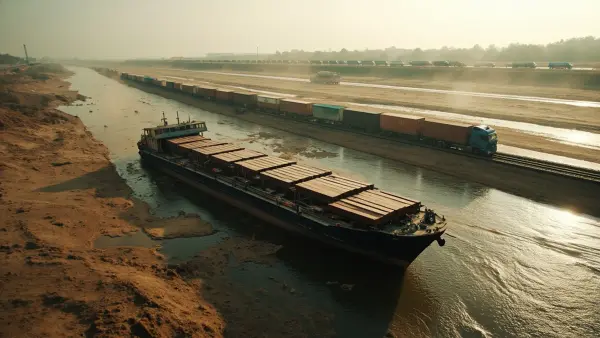
Europe's vital Rhine River faces unprecedented challenges from record low water levels, significantly disrupting inland waterway transport.
The ongoing drought and extreme heat have led to severely restricted or even impossible barge navigation in many areas of the Rhine, a critical artery for European logistics. This dramatic reduction in water levels forces industries reliant on this waterway to urgently seek alternative transport solutions, creating a ripple effect across the continent's supply chains. The shift away from barges to other modes is introducing significant operational complexities and cost increases.
The Ripple Effect on European Supply Chains
The restriction of barge transport on the Rhine has immediate and far-reaching consequences for industries, particularly those dealing with bulk goods like chemicals, grains, and coal. Companies face increased transit times and higher costs as they pivot from cost-efficient barges to more expensive and often less capacious road and rail alternatives. This shift not only strains budgets but also puts pressure on the availability of trucks and rail cars, which are already in high demand.
Reduced barge capacity also means that shippers must quickly find new ways to move goods, often requiring them to break down larger consignments into smaller, more manageable truckloads. This logistical challenge exacerbates operational planning and requires rapid adjustments to distribution networks. For carriers, filling empty runs and finding return loads becomes more complex when primary routes are disrupted; digital platforms like Pickup2 help them publish available vehicle capacity and find alternative loads across Europe to fill those gaps.
The impact extends beyond direct users of the Rhine, influencing manufacturing schedules and potentially leading to shortages of critical materials further downstream. Businesses that previously relied on predictable, large-volume barge shipments are now forced to adopt agile, multi-modal strategies. This demand for adaptability highlights the need for robust planning and contingency measures to mitigate ongoing disruptions.
Shifting Gears: Embracing Alternative Transport Modes
In response to the Rhine's challenges, there's been a significant surge in demand for both rail and dedicated trucking solutions. Rail freight offers a viable alternative for moving large volumes of goods over long distances, but its infrastructure and capacity may not always align perfectly with original barge routes or schedules. Many companies are scrambling to secure rail slots, which are becoming increasingly competitive and expensive.
Trucking, while more flexible, presents its own set of hurdles. The sheer volume of goods previously moved by barges requires an enormous number of additional trucks, straining driver availability and fuel resources. This sudden increase in demand leads to higher spot rates and can cause delays as carriers adjust their fleet deployments and optimize routes.
Companies are increasingly exploring multi-modal approaches, combining different transport methods to maintain continuity. This might involve short-sea shipping to ports, followed by rail or truck for inland distribution, or using trucks for the initial leg to a rail hub. These complex logistics chains necessitate seamless coordination and the ability to quickly source and manage diverse transport options.
Strategic Adaptations for Business Continuity
To navigate these disruptions, logistics companies must prioritize flexibility, real-time information, and strong partnerships. Proactive planning, including diversifying transport contracts and exploring new routes, is crucial for mitigating future shocks. Investing in advanced planning tools and digital platforms can provide the agility needed to respond swiftly to changing conditions.
Leveraging digital freight exchanges allows shippers, freight forwarders, and carriers to quickly find and bid on FTL/LTL loads or available vehicle capacity, including multi-stop routes and specialized requirements like temperature control. The ability to negotiate rates and communicate in real-time with verified partners is paramount in a volatile market. Furthermore, platforms offering robust company verification and post-transaction ratings ensure users deal with trustworthy partners, which is essential when forging new logistical relationships under pressure.
Conclusion
The Rhine River drought underscores the vulnerability of Europe's logistics networks to environmental shifts and the urgent need for adaptable solutions. While challenging, this period also highlights the resilience and innovation within the industry. By embracing multi-modal strategies, leveraging digital tools for load and capacity exchange, and fostering verified partnerships, companies can effectively navigate disruptions and build more robust, future-proof supply chains. Platforms like Pickup2 help logistics companies adapt to changing conditions by offering diverse load and capacity options and connecting them with verified partners across Europe.