
U-Space & Drones: Reshaping EU Last-Mile Logistics by 2026

 Author: Pickup2 Team
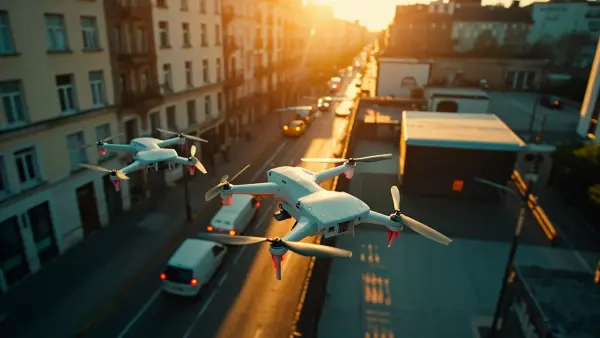
Europe's skies are on the cusp of a profound transformation, poised to redefine last-mile logistics.
The European Union's U-space airspace framework, set to be fully operational by 2026, is not merely an upgrade; it's a foundational shift. This landmark initiative is specifically designed to enable the safe and efficient integration of Beyond Visual Line of Sight (BVLOS) drone operations into regular commercial logistics networks across member states. For carriers and postal operators, this framework unlocks unprecedented opportunities to innovate, optimize, and streamline their delivery services.
The U-Space Framework: Unleashing Autonomous Air Deliveries
U-space represents a set of services and procedures that ensure the safe and orderly integration of drones into designated airspace. By establishing common rules for drone identification, geofencing, flight authorization, and traffic information, it provides a structured environment for autonomous operations. This robust regulatory framework is crucial for scaling drone logistics, moving beyond experimental trials to widespread commercial deployment.
The full implementation of U-space by 2026 is a critical milestone, explicitly authorizing BVLOS operations. This means drones will no longer be limited to flights within an operator's direct sight, paving the way for longer routes, hub-to-hub transfers, and expansive delivery networks. Such autonomy is essential for reaching remote, rural, and suburban areas where traditional last-mile solutions are often cost-prohibitive or inefficient.
Unlocking Efficiency and Overcoming Urban Challenges
The economic benefits of drone logistics are substantial. Early adopters and ongoing pilot programs are demonstrating potential cost savings of up to 60% on last-mile deliveries, primarily through reduced labor, fuel, and vehicle maintenance expenses. These significant efficiencies are driving rapid investment in autonomous delivery networks, particularly for time-sensitive goods and critical supplies.
Beyond cost reduction, drones offer a strategic advantage in bypassing increasingly restrictive Urban Vehicle Access Regulations (UVARs) and congested city centers. By utilizing airspace, logistics providers can avoid road traffic, parking restrictions, and emission zones, ensuring quicker, more reliable deliveries directly to urban peripheries or designated drop-off points. This capability is proving invaluable for urgent medical supplies, critical spare parts, and high-value e-commerce items.
Companies are already piloting these networks, delivering essential medical supplies to hospitals, distributing spare parts for industrial operations, and fulfilling e-commerce orders in underserved suburban and rural communities. The flexibility and speed of drone delivery open up new markets and improve service levels in areas where ground infrastructure presents significant challenges.
Conclusion
The convergence of U-space regulation and advanced drone technology is setting the stage for a fundamental transformation in European last-mile logistics. As 2026 approaches, logistics providers who embrace these innovations will not only secure significant operational advantages but also position themselves as leaders in a rapidly evolving market. Platforms like Pickup2 can help logistics companies discover new opportunities and adapt to this exciting future, connecting them to partners ready for the skies.